
New 2025 Drone Regulations: 7 Changes Every Security Professional Must Know
- bouf55
- Sep 11
- 4 min read
The drone industry has experienced a seismic shift in 2025, with new regulations that directly impact security professionals across Canada and the United States. These changes aren't just bureaucratic updates – they represent a fundamental transformation in how security teams can use drone technology for surveillance, perimeter monitoring, and emergency response.
If you're a security professional who relies on drones or RPAS (Remotely Piloted Aircraft Systems) for your operations, understanding these seven critical regulatory changes could mean the difference between seamless operations and costly compliance issues.
1. The DJI and Autel Automatic Ban Timeline
The most significant change comes from the FY25 National Defense Authorization Act, signed into law in December 2024. This legislation established a clear pathway to ban Chinese-manufactured drones, with DJI and Autel facing automatic inclusion on the FCC's Covered List by December 23, 2025.
What this means for you: Unless a national security agency determines these drones don't pose an "unacceptable risk," new DJI and Autel models will become ineligible for purchase with federal funds. This affects government security contractors, municipal security departments, and any organization receiving federal funding for security operations.
Action required: If your security operations depend on DJI or Autel drones, start researching domestic alternatives now. The December deadline is approaching fast, and supply chain disruptions are likely as organizations scramble for replacements.
2. "Unleashing American Drone Dominance" Executive Order
President Trump's executive order, signed in June 2025, actively promotes U.S.-made drone technology while working to eliminate foreign drone dependency. This order reinforces the security review requirements and signals a clear policy preference for domestic manufacturers.
Impact on security operations: Government security contracts increasingly favor proposals featuring American-made drones. Private security companies working with government clients should expect similar preferences in RFP requirements.
Strategic consideration: Familiarize yourself with domestic drone manufacturers like Skydio, Teal Drones, and other U.S. companies. Their technology may become the new standard for security applications.
3. Digital Flight Authorization System (DFAS)
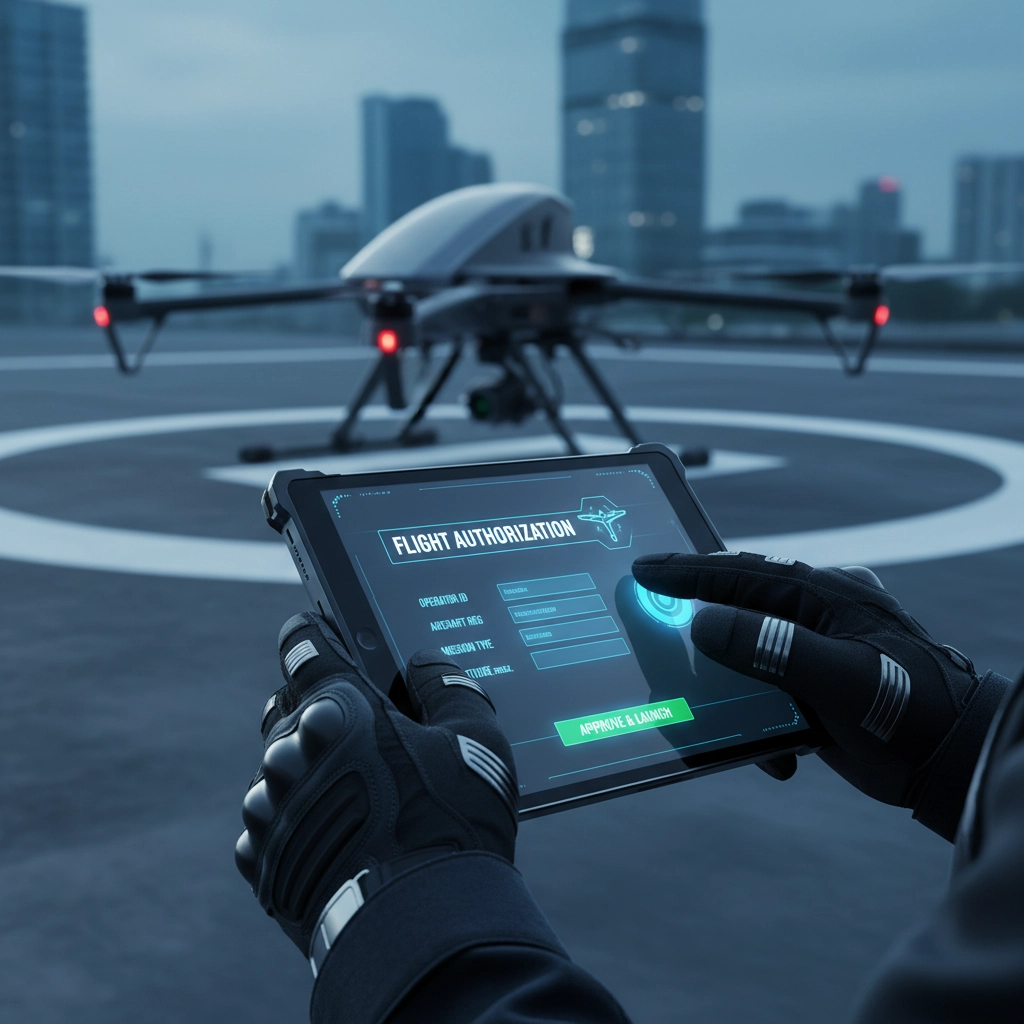
The FAA is developing a comprehensive Digital Flight Authorization System that represents the most significant change in drone operation procedures since the initial Part 107 regulations. This system requires all drone operators to register their identity, position, and purpose before every flight.
Key requirements:
User identification credentials before takeoff
Real-time position reporting
Purpose declaration for each mission
Cryptographic authentication for commercial operations
For security professionals: This system affects all drone types, including those used for perimeter surveillance, crowd monitoring, and incident response. Budget for additional administrative time and ensure your team understands the pre-flight authorization process.
4. National Security Review Mandate
Current regulations require appropriate national security agencies – including the DoD, NSA, FBI, DHS, or ODNI – to complete formal security audits of Chinese drone manufacturers by December 2025. As of our publication date, no agency has scheduled DJI's review, putting the company on track for an automatic ban.
Compliance implications: Security departments using DJI equipment should assume the ban will proceed and plan accordingly. The uncertainty itself creates operational risk, as clients and supervisors may question the wisdom of investing in potentially banned technology.
Professional recommendation: Document your current drone inventory and create transition timelines for moving to compliant equipment. This proactive approach demonstrates professional risk management to clients and employers.
5. Restrictions on Existing Equipment
Even if you currently own DJI or Autel drones, new restrictions will limit software updates, hardware upgrades, and add-ons. This creates long-term viability concerns for existing equipment.
Operational impact: Security drones require regular software updates for optimal performance, bug fixes, and security patches. Without these updates, your equipment becomes increasingly vulnerable and may not integrate with newer security systems.
Budget planning: Calculate the remaining useful life of your current drone fleet. Equipment that can't receive updates may need replacement sooner than anticipated, affecting your capital expenditure plans.
6. Accelerating State and Local Restrictions
Beyond federal regulations, numerous states and municipalities have enacted their own drone restrictions, creating a complex compliance landscape. Security professionals now must navigate federal, state, and local requirements that vary by jurisdiction.
Multi-jurisdictional challenges: If your security operations cross state lines or involve multiple municipalities, you'll need to maintain compliance with varying local regulations. Some areas have restricted flight zones around critical infrastructure, while others have specific licensing requirements.
Best practice: Maintain a compliance matrix for each area where you operate. Consider partnering with local legal counsel familiar with drone regulations in your primary operating regions.
7. Federal Funding Restrictions
The new regulations specifically prohibit using federal funds to purchase drones appearing on the FCC's Covered List. This affects government agencies, contractors, and organizations receiving federal funding for security operations.
Funding implications: If your organization receives federal grants, contracts, or other funding sources, verify that drone purchases comply with the new restrictions. Non-compliance could jeopardize future funding relationships.
Procurement process: Update your procurement policies to include compliance checks for all drone equipment purchases. This protects your organization from inadvertent violations that could have serious financial consequences.

Preparing for the New Reality
These regulatory changes require immediate strategic planning. Security professionals should evaluate their current drone operations, assess compliance risks, and develop transition strategies for moving to approved equipment.
Immediate steps:
Inventory your current drone equipment and assess compliance status
Research domestic drone alternatives that meet your operational requirements
Calculate budget impacts for equipment replacement and additional compliance procedures
Review client contracts for drone-related compliance requirements
Train your team on new authorization procedures and documentation requirements
Long-term planning: The drone regulatory landscape will continue evolving. Organizations that adapt quickly and maintain compliance will have competitive advantages in the security services market.
The Path Forward
While these regulations create short-term disruption, they also present opportunities for security professionals who adapt effectively. Domestic drone manufacturers are rapidly improving their technology, and compliance with new regulations demonstrates professionalism and reliability to clients.
The security industry has always prioritized protection and risk management. Applying these same principles to drone operations – through proactive compliance, strategic planning, and equipment diversification – ensures your security services remain effective and legally sound.
Stay informed about regulatory updates, maintain compliance documentation, and view these changes as an investment in the long-term sustainability of your security operations. The professionals who navigate these regulations successfully will be better positioned for future growth and client trust.
For comprehensive security training and updates on regulatory compliance, explore SecuGuard Academy's programs designed specifically for today's evolving security landscape at https://www.secuguard.ca.
Comments