
Are Traditional Security Guards Dead? Why Tech-Savvy Officers Are Taking Over
- bouf55
- Sep 11
- 5 min read
Walk into any modern office building, shopping center, or industrial facility today, and you'll notice something different about the security guards. They're not just carrying flashlights and clipboards anymore. Instead, they're equipped with tablets, smartphones, body cameras, and sophisticated communication devices that would make a tech enthusiast jealous.
So, are traditional security guards becoming obsolete? The short answer is no – but they're definitely transforming into something much more powerful.
The Reality: Evolution, Not Extinction
The security industry isn't experiencing a mass extinction event. Instead, it's going through one of the most exciting evolution periods in its history. Traditional security guards aren't disappearing; they're upgrading into technology-enhanced professionals who combine human expertise with cutting-edge digital tools.
Think about it like this: a carpenter didn't become obsolete when power tools were invented. Instead, those who embraced the new technology became more efficient, accurate, and valuable. The same thing is happening in security.
Modern clients don't just want someone to watch their property anymore. They want real-time updates, detailed incident reports, video evidence, and instant communication with emergency services. They want professionals who can operate surveillance systems, manage access controls, and analyze security data – all while maintaining the human judgment and presence that technology can't replicate.
What Tech-Savvy Skills Look Like Today
Today's security professionals are expected to master a completely different skill set than their predecessors. Here's what modern security guards are learning:
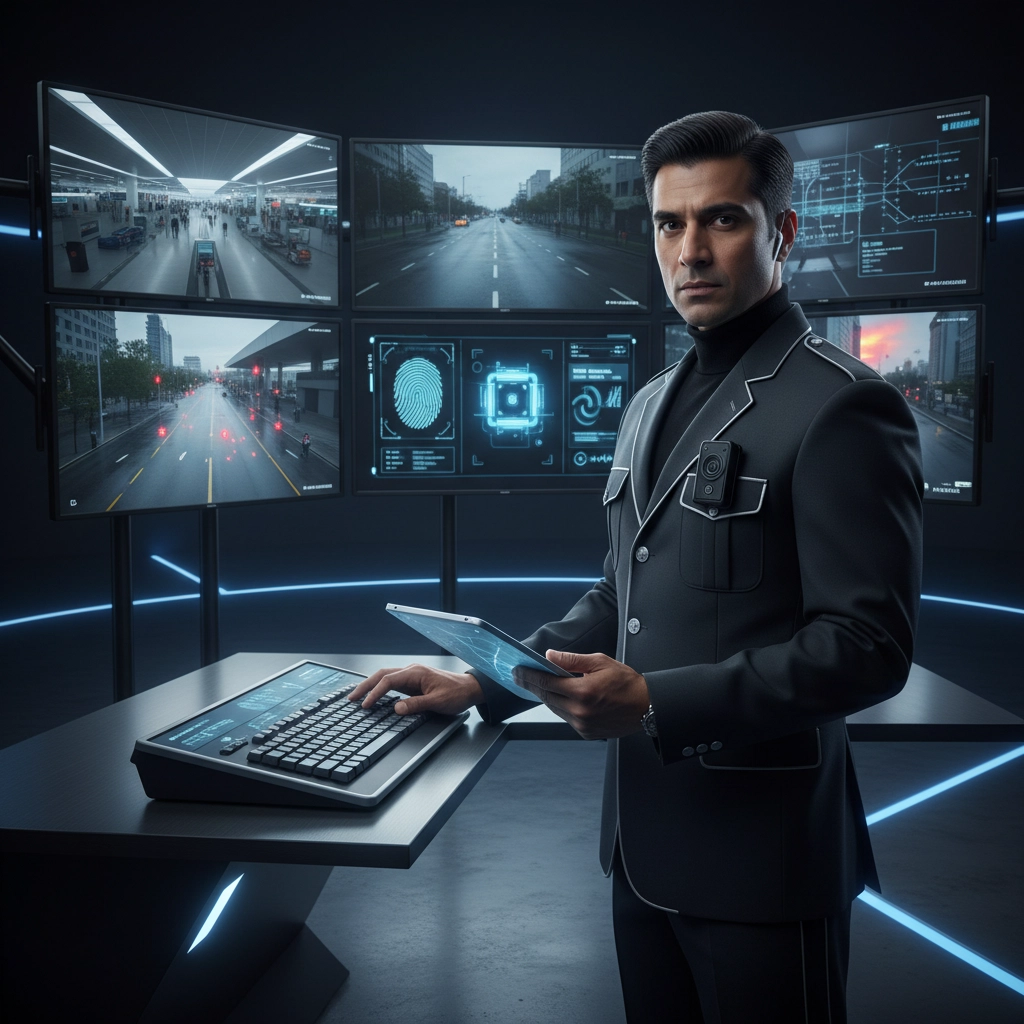
Digital Surveillance Systems: Instead of just walking patrol routes, guards now monitor multiple high-definition camera feeds, use facial recognition software, and manage automated alert systems. They can zoom in on suspicious activity from across a facility and coordinate responses in real-time.
Mobile Security Applications: Most guards now carry smartphones or tablets loaded with security management apps. These tools allow them to file incident reports instantly, access building schematics, communicate with supervisors, and even receive real-time updates about potential threats.
Biometric Access Controls: Modern guards don't just check ID cards. They manage sophisticated access control systems that use fingerprints, retinal scans, and proximity cards. They understand how to troubleshoot these systems and ensure only authorized personnel gain entry.
Drone Operations: Some security companies now train their guards to operate surveillance drones for perimeter checks, roof inspections, and crowd monitoring. This gives them eyes in places that would be difficult or dangerous to patrol on foot.
IoT Security Devices: Guards now work with Internet of Things sensors that monitor everything from temperature changes to unauthorized movement. They need to understand how these devices work and how to respond to different types of alerts.
Why Human Touch Still Matters
Despite all this technology, human security guards remain absolutely essential. Here's why machines can't replace the human element:
Real-Time Decision Making: When a situation develops, guards need to make split-second decisions based on complex factors that no algorithm can fully process. Should they approach a suspicious person? Call police immediately? Evacuate an area? These decisions require human judgment, experience, and intuition.
De-escalation and Communication: Try getting a drunk person to calm down by talking to a robot. It won't work. Human guards can use empathy, verbal de-escalation techniques, and personal presence to defuse tense situations before they escalate into violence.
Physical Response: When something goes wrong, you need someone who can physically respond. Guards can provide first aid, direct evacuations, apprehend suspects, and coordinate with emergency responders on the ground. A camera can watch, but it can't act.
Customer Service: In many settings, security guards serve as the friendly face of the organization. They give directions, answer questions, and make visitors feel welcome while maintaining security protocols.

The Perfect Partnership: Human + Tech
The most effective modern security operations don't choose between humans and technology – they combine both for maximum effectiveness. Here's how this partnership works in practice:
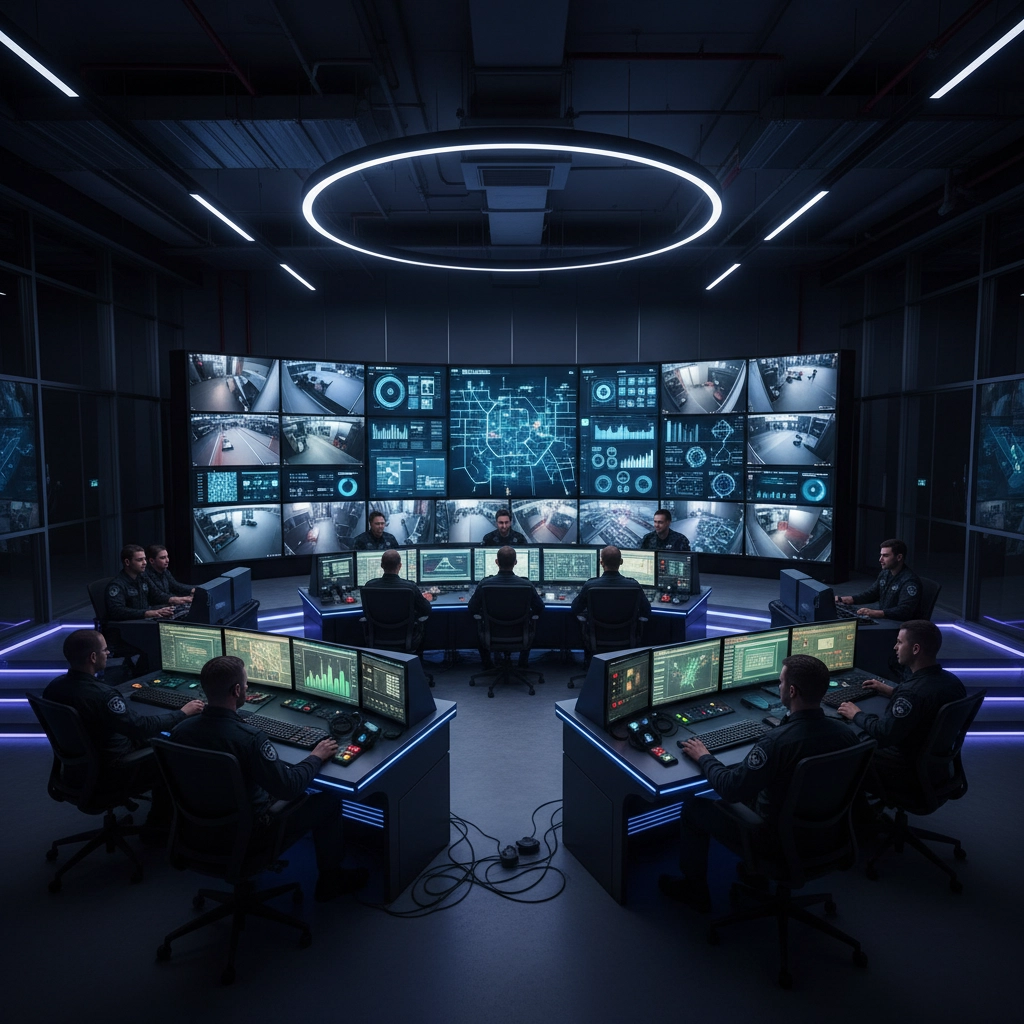
Enhanced Situational Awareness: Technology gives guards superhuman awareness. They can monitor dozens of cameras simultaneously, receive automated alerts about unusual activity, and track multiple incidents across a large facility. This amplifies their natural observation skills exponentially.
Faster Response Times: When guards are equipped with mobile communication devices and GPS tracking, they can respond to incidents much faster. Supervisors can dispatch the closest guard to any location instantly, and guards can call for backup or emergency services with the touch of a button.
Better Documentation: Modern security systems automatically record everything – video footage, access logs, incident reports, and patrol confirmations. This creates a comprehensive record that's invaluable for investigations, insurance claims, and legal proceedings.
Predictive Capabilities: Advanced security systems can analyze patterns and predict when incidents are most likely to occur. This allows guards to focus their attention on high-risk areas and times, making their presence more effective.
Real-World Examples of Tech Integration
Let's look at some specific examples of how technology is transforming security work:
Retail Security: Guards in shopping centers now use AI-powered cameras that can automatically detect shoplifting behaviors, crowd densities, and abandoned packages. When the system flags something suspicious, the guard receives an instant alert with the exact location and video footage.
Corporate Security: Office building guards manage sophisticated visitor management systems that can verify identities, print temporary access badges, and track visitor movements throughout the building. They also monitor environmental sensors that detect everything from smoke to unusual vibrations.
Industrial Security: Guards at manufacturing facilities use thermal cameras to monitor equipment temperatures, gas sensors to detect leaks, and automated systems that can shut down operations if safety thresholds are exceeded.
Event Security: At large events, guards coordinate with crowd monitoring systems that use AI to detect overcrowding, aggressive behavior, and medical emergencies in real-time.
Skills That Matter Most
If you're considering a career in security or looking to upgrade your current skills, here are the most valuable tech-savvy abilities to develop:
Basic Computer Literacy: You don't need to be a programmer, but you should be comfortable using computers, smartphones, and tablets. This includes understanding operating systems, using apps, and troubleshooting basic technical issues.
Communication Technology: Master professional radio protocols, understand how different communication systems work, and learn to use mobile communication apps effectively.
Surveillance Systems: Learn how to operate different types of camera systems, understand basic video analytics, and know how to retrieve and export footage for investigations.
Report Writing: Modern incident reports are often filed electronically. Develop strong written communication skills and learn to use digital reporting systems efficiently.
Customer Service Technology: Many security positions involve using visitor management systems, access control panels, and customer service applications.
The Training Revolution
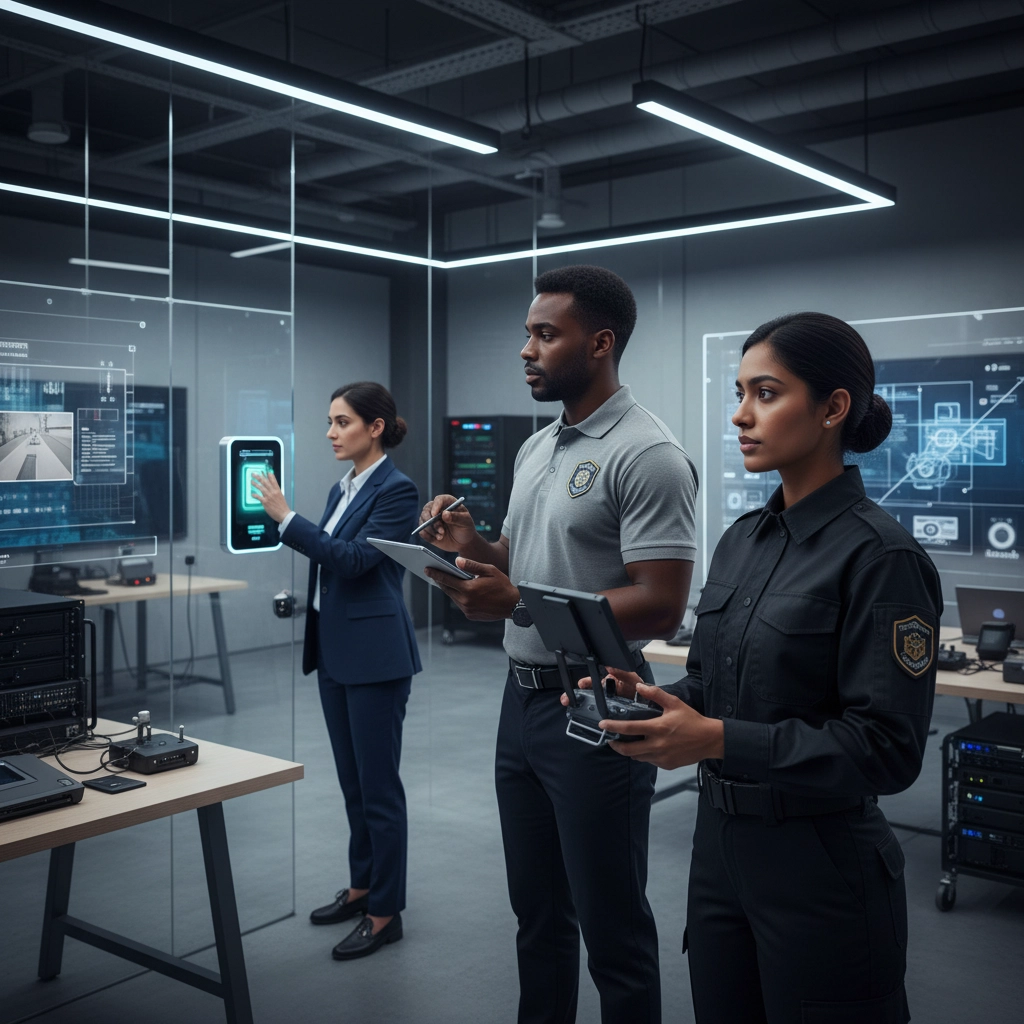
Security training programs are rapidly evolving to meet these new demands. At SecuGuard Academy, we've completely redesigned our curriculum to prepare students for the modern security landscape. Our programs now include hands-on training with the latest security technologies, from AI surveillance systems to mobile security applications.
We don't just teach students how to use current technology – we teach them how to adapt to new systems as they're developed. The security industry is constantly evolving, and successful professionals need to be lifelong learners who can quickly master new tools and techniques.
Looking Forward
The future of security lies in the perfect blend of human intuition and technological capability. Guards who embrace this evolution won't just survive – they'll thrive. They'll command higher salaries, enjoy more interesting work, and have better career advancement opportunities.
Traditional security guards aren't dead, but those who refuse to evolve might find themselves left behind. The industry is moving fast, and there's never been a better time to develop the skills that will define the next generation of security professionals.
The question isn't whether technology will change security work – it already has. The question is whether you'll be part of this exciting transformation or watch it happen from the sidelines. The choice is yours, and the opportunity is now.
Ready to future-proof your security career? Explore our technology-focused training programs and join the ranks of tech-savvy security professionals who are leading the industry forward.
Comments